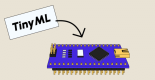
TinyML in Healthcare: AI on Wearable Devices Training Course
TinyML involves embedding machine learning capabilities into low-power, resource-constrained wearable and medical devices.
This instructor-led live training, available online or onsite, is designed for intermediate-level professionals looking to implement TinyML solutions for healthcare monitoring and diagnostic applications.
Upon completion of this training, participants will be able to:
- Design and deploy TinyML models for real-time health data processing.
- Collect, preprocess, and interpret biosensor data to derive AI-driven insights.
- Optimize models to meet the low-power and memory constraints of wearable devices.
- Assess the clinical relevance, reliability, and safety of TinyML-driven outputs.
Course Format
- Lectures accompanied by live demonstrations and interactive discussions.
- Practical exercises involving wearable device data and TinyML frameworks.
- Guided lab implementation exercises.
Customization Options
- For tailored training that aligns with specific healthcare devices or regulatory workflows, please contact us to customize the program.
Course Outline
Foundations of TinyML in Healthcare
- Characteristics of TinyML systems
- Healthcare-specific constraints and requirements
- Overview of wearable AI architectures
Biosignal Acquisition and Preprocessing
- Working with physiological sensors
- Noise reduction and filtering techniques
- Feature extraction for medical time-series
Developing TinyML Models for Wearables
- Selecting algorithms for physiological data
- Training models for constrained environments
- Evaluating performance on health datasets
Deploying Models on Wearable Devices
- Using TensorFlow Lite Micro for on-device inference
- Integrating AI models in medical wearables
- Testing and validation on embedded hardware
Power and Memory Optimization
- Techniques for reducing computational load
- Optimizing data flow and memory usage
- Balancing accuracy and efficiency
Safety, Reliability, and Compliance
- Regulatory considerations for AI-enabled wearables
- Ensuring robustness and clinical usability
- Fail-safe mechanisms and error handling
Case Studies and Healthcare Applications
- Wearable cardiac monitoring systems
- Activity recognition in rehabilitation
- Continuous glucose and biometric tracking
Future Directions in Medical TinyML
- Multi-sensor fusion approaches
- Personalized health analytics
- Next-generation low-power AI chips
Summary and Next Steps
Requirements
- Understanding of fundamental machine learning concepts
- Experience with embedded or biomedical devices
- Familiarity with Python or C-based development
Audience
- Healthcare professionals
- Biomedical engineers
- AI developers
Open Training Courses require 5+ participants.
TinyML in Healthcare: AI on Wearable Devices Training Course - Booking
TinyML in Healthcare: AI on Wearable Devices Training Course - Enquiry
TinyML in Healthcare: AI on Wearable Devices - Consultancy Enquiry
Upcoming Courses
Related Courses
Agentic AI in Healthcare
14 HoursAgentic AI refers to a methodology where artificial intelligence systems plan, reason, and utilize tools to achieve objectives within specified boundaries.
This instructor-led, live training (available online or onsite) is designed for intermediate-level healthcare and data professionals seeking to design, evaluate, and govern agentic AI solutions for clinical and operational applications.
Upon completion of this training, participants will be able to:
- Articulate the concepts and constraints of agentic AI within healthcare settings.
- Design secure agent workflows incorporating planning, memory, and tool integration.
- Construct retrieval-augmented agents that process clinical documents and knowledge bases.
- Evaluate, monitor, and govern agent behavior using guardrails and human-in-the-loop controls.
Course Format
- Interactive lectures and facilitated discussions.
- Guided labs and code walkthroughs in a sandbox environment.
- Scenario-based exercises focused on safety, evaluation, and governance.
Customization Options
- To request a customized version of this course, please contact us to arrange.
AI Agents for Healthcare and Diagnostics
14 HoursThis instructor-led, live training in Serbia (online or onsite) is aimed at intermediate-level to advanced-level healthcare professionals and AI developers who wish to implement AI-driven healthcare solutions.
By the end of this training, participants will be able to:
- Understand the role of AI agents in healthcare and diagnostics.
- Develop AI models for medical image analysis and predictive diagnostics.
- Integrate AI with electronic health records (EHR) and clinical workflows.
- Ensure compliance with healthcare regulations and ethical AI practices.
AI and AR/VR in Healthcare
14 HoursThis instructor-led live training in Serbia (online or in-person) is intended for intermediate-level healthcare professionals seeking to apply AI and AR/VR solutions for medical training, surgical simulations, and rehabilitation.
By the conclusion of this training, participants will be able to:
- Grasp the function of AI in improving AR/VR experiences within healthcare.
- Employ AR/VR for medical education and surgical simulations.
- Apply AR/VR instruments in patient rehabilitation and therapy.
- Investigate the ethical and privacy issues surrounding AI-enhanced medical tools.
AI for Healthcare using Google Colab
14 HoursThis guided, live training in Serbia (online or in-person) targets intermediate data scientists and medical professionals seeking to apply AI for advanced healthcare applications using Google Colab.
Upon completion of this training, participants will be able to:
- Deploy AI models for healthcare using Google Colab.
- Utilize AI to perform predictive modeling on healthcare datasets.
- Conduct medical image analysis through AI-driven methodologies.
- Investigating ethical implications associated with AI solutions in healthcare.
AI in Healthcare
21 HoursThis instructor-led, live training in Serbia (online or on-site) targets intermediate-level healthcare professionals and data scientists eager to grasp and implement AI technologies within healthcare settings.
Upon completing this training, participants will be capable of:
- Recognizing primary healthcare challenges that AI can resolve.
- Assessing AI’s influence on patient safety, care quality, and medical research.
- Comprehending the interplay between AI and healthcare business frameworks.
- Applying core AI principles to healthcare situations.
- Constructing machine learning models for the analysis of medical data.
Building End-to-End TinyML Pipelines
21 HoursTinyML involves the deployment of optimized machine learning models onto edge devices with limited resources.
This instructor-led live training (available online or onsite) targets advanced technical professionals aiming to design, optimize, and deploy comprehensive TinyML pipelines.
Upon completion of this training, participants will acquire the skills to:
- Gather, prepare, and manage datasets for TinyML applications.
- Train and optimize models for low-power microcontrollers.
- Convert models into lightweight formats compatible with edge devices.
- Deploy, test, and monitor TinyML applications on actual hardware.
Course Format
- Instructor-led lectures and technical discussions.
- Practical labs and iterative experimentation.
- Hands-on deployment on microcontroller-based platforms.
Course Customization Options
- To tailor the training to specific toolchains, hardware boards, or internal workflows, please contact us to arrange.
ChatGPT for Healthcare
14 HoursThis instructor-led, live training in Serbia (online or onsite) is designed for healthcare professionals and researchers who wish to leverage ChatGPT to enhance patient care, streamline workflows, and improve healthcare outcomes.
By the end of this training, participants will be able to:
- Grasp the fundamentals of ChatGPT and its applications in healthcare.
- Use ChatGPT to automate healthcare processes and interactions.
- Provide accurate medical information and support to patients using ChatGPT.
- Apply ChatGPT for medical research and analysis.
Edge AI for Healthcare
14 HoursThis instructor-led, live training in Serbia (online or in-person) is designed for intermediate-level healthcare practitioners, biomedical engineers, and AI developers aiming to utilize Edge AI for innovative healthcare solutions.
Upon completion of this training, participants will be capable of:
- Understanding the role and benefits of Edge AI in healthcare.
- Developing and deploying AI models on edge devices for healthcare applications.
- Implementing Edge AI solutions in wearable devices and diagnostic tools.
- Designing and deploying patient monitoring systems using Edge AI.
- Addressing ethical and regulatory considerations in healthcare AI applications.
Fine-Tuning AI for Healthcare: Medical Diagnosis and Predictive Analytics
14 HoursThis instructor-led, live training in Serbia (online or onsite) is designed for intermediate to advanced medical AI developers and data scientists who aim to fine-tune models for clinical diagnosis, disease prediction, and patient outcome forecasting using structured and unstructured medical data.
By the end of this training, participants will be able to:
- Fine-tune AI models on healthcare datasets including EMRs, imaging, and time-series data.
- Apply transfer learning, domain adaptation, and model compression in medical contexts.
- Address privacy, bias, and regulatory compliance in model development.
- Deploy and monitor fine-tuned models in real-world healthcare environments.
Generative AI and Prompt Engineering in Healthcare
8 HoursGenerative AI is a technology that creates new content such as text, images, and recommendations based on prompts and data.
This instructor-led, live training (online or onsite) is aimed at beginner-level to intermediate-level healthcare professionals who wish to use generative AI and prompt engineering to improve efficiency, accuracy, and communication in medical contexts.
By the end of this training, participants will be able to:
- Understand the fundamentals of generative AI and prompt engineering.
- Apply AI tools to streamline clinical, administrative, and research tasks.
- Ensure ethical, safe, and compliant use of AI in healthcare.
- Optimize prompts to achieve consistent and accurate results.
Format of the Course
- Interactive lecture and discussion.
- Practical exercises and case studies.
- Hands-on experimentation with AI tools.
Course Customization Options
- To request a customized training for this course, please contact us to arrange.
Generative AI in Healthcare: Transforming Medicine and Patient Care
21 HoursThis instructor-led, live training in Serbia (online or onsite) is aimed at beginner-level to intermediate-level healthcare professionals, data analysts, and policy makers who wish to understand and apply generative AI in the context of healthcare.
By the end of this training, participants will be able to:
- Explain the principles and applications of generative AI in healthcare.
- Identify opportunities for generative AI to enhance drug discovery and personalized medicine.
- Utilize generative AI techniques for medical imaging and diagnostics.
- Assess the ethical implications of AI in medical settings.
- Develop strategies for integrating AI technologies into healthcare systems.
LangGraph in Healthcare: Workflow Orchestration for Regulated Environments
35 HoursLangGraph empowers the creation of stateful, multi-actor workflows driven by Large Language Models (LLMs), offering precise control over execution paths and state management. In the healthcare sector, these capabilities are essential for ensuring compliance, enabling interoperability, and developing decision-support systems that seamlessly align with clinical workflows.
This instructor-led live training, available online or onsite, is designed for intermediate to advanced professionals seeking to design, implement, and manage LangGraph-based solutions for healthcare while navigating regulatory, ethical, and operational complexities.
Upon completion of this training, participants will be able to:
- Design LangGraph workflows tailored to healthcare needs, prioritizing compliance and auditability.
- Integrate LangGraph applications with established medical ontologies and standards, including FHIR, SNOMED CT, and ICD.
- Apply best practices for reliability, traceability, and explainability within sensitive operational environments.
- Deploy, monitor, and validate LangGraph applications in real-world healthcare production settings.
Course Format
- Interactive lectures and discussions.
- Hands-on exercises utilizing real-world case studies.
- Practical implementation in a live laboratory environment.
Customization Options
- To request a customized version of this training, please contact us to make arrangements.
Multimodal AI for Healthcare
21 HoursThis instructor-led, live training in Serbia (online or onsite) is designed for intermediate to advanced healthcare professionals, medical researchers, and AI developers who want to apply multimodal AI in medical diagnostics and healthcare applications.
Upon completion of this training, participants will be able to:
- Understand the role of multimodal AI in modern healthcare.
- Integrate structured and unstructured medical data for AI-driven diagnostics.
- Apply AI techniques to analyze medical images and electronic health records.
- Develop predictive models for disease diagnosis and treatment recommendations.
- Implement speech and natural language processing (NLP) for medical transcription and patient interaction.
Ollama Applications in Healthcare
14 HoursOllama is a lightweight platform designed for running large language models locally.
This instructor-led, live training (available online or onsite) targets intermediate-level healthcare practitioners and IT teams seeking to deploy, customize, and operationalize Ollama-based AI solutions within clinical and administrative settings.
Upon completing this training, participants will be able to:
- Install and configure Ollama for secure use in healthcare settings.
- Integrate local LLMs into clinical workflows and administrative processes.
- Customize models for healthcare-specific terminology and tasks.
- Apply best practices for privacy, security, and regulatory compliance.
Course Format
- Interactive lecture and discussion.
- Hands-on demonstrations and guided exercises.
- Practical implementation in a sandboxed healthcare simulation environment.
Course Customization Options
- To request a customized training for this course, please contact us to arrange.
Prompt Engineering for Healthcare
14 HoursThis instructor-led, live training in Serbia (online or onsite) is aimed at intermediate-level healthcare professionals and AI developers who wish to leverage prompt engineering techniques for improving medical workflows, research efficiency, and patient outcomes.
By the end of this training, participants will be able to:
- Understand the fundamentals of prompt engineering in healthcare.
- Use AI prompts for clinical documentation and patient interactions.
- Leverage AI for medical research and literature review.
- Enhance drug discovery and clinical decision-making with AI-driven prompts.
- Ensure compliance with regulatory and ethical standards in healthcare AI.