Introduction to IoT Using Arduino Training Course
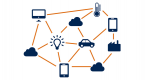
The Internet of Things (IoT) is a network infrastructure that connects physical objects and software applications wirelessly, enabling them to communicate with each other and exchange data through the cloud.
In this instructor-led, live training, participants will gain an understanding of IoT fundamentals as they work through the process of creating an Arduino-based IoT sensor system.
By the end of this training, participants will be able to:
- Comprehend the principles of IoT, including its components and communication methods.
- Utilize Arduino communication modules to develop various types of IoT systems.
- Control Arduino using a mobile application.
- Connect an Arduino to other devices via Wi-Fi.
- Build and deploy an IoT Sensor System.
Format of the Course
- Interactive lecture and discussion.
- Extensive exercises and practice sessions.
- Hands-on implementation in a live-lab environment.
Course Customization Options
Arduino is available in different models and supports various programming interfaces (C, C++, C#, Python) and development environments (Arduino IDE, Visual Studio, etc.). To request a different setup, please contact us to arrange.
This course is available as onsite live training in Serbia or online live training.Course Outline
Introduction to IoT
- The impact of IoT in industry and daily life
- Understanding the IoT ecosystem: devices, platforms, and applications
Overview of IoT Components
- Analog sensors
- Digital sensors
Overview of IoT Communication
- Wi-Fi
- Bluetooth
- RFID
- Mobile internet
Programming an Arduino IoT Device
- Preparing the development environment (Arduino IDE)
- Exploring the Arduino language (C/C++) syntax
- Coding, compiling, and uploading to the microcontroller
Working with Arduino Communication Modules
- Bluetooth Modules
- WiFi Modules
- RFID Modules
- I2C and SPI
Using a Mobile App to Control Arduino IoT
- Overview of Blynk Mobile App for IoT
- Installing Blynk
Interfacing Arduino and Blynk via USB
- LED Blinking
- Controlling a Servomotor
ESP8266 WiFi Serial Module
- Overview
- Setting Up the Hardware
- Interfacing with Arduino
Creating an IoT Temperature and Humidity Sensor System
- Overview of DHT-22 Sensor
- Interfacing the Hardware: Arduino, ESP8266 WiFi Module, and DHT-22 Sensor
- Checking Your Data via ThingSpeak
- Connecting Your Arduino Set-up to Blynk via WiFi
Running your Arduino IoT Sensor System
Troubleshooting
Summary and Conclusion
Requirements
- A general understanding of electronics.
- Arduino language (based on C/C++) will be used; no previous programming experience is required.
- Participants are responsible for purchasing their own Arduino hardware and components. We recommend the Arduino Starter Kit (https://store.arduino.cc/products/arduino-starter-kit-multi-language).
Audience
- Hobbyists
- Hardware/software engineers and technicians
- Technical persons in all industries
- Beginner developers
Open Training Courses require 5+ participants.
Introduction to IoT Using Arduino Training Course - Booking
Introduction to IoT Using Arduino Training Course - Enquiry
Introduction to IoT Using Arduino - Consultancy Enquiry
Testimonials (1)
Practical work
James - Argent Energy
Course - Introduction to IoT Using Arduino
Upcoming Courses
Related Courses
Advanced Arduino Programming
14 HoursIn this instructor-led, live training in Serbia, participants will learn how to program the Arduino using advanced techniques as they step through the creation of a simple sensor alert system.
By the end of this training, participants will be able to:
- Understand how Arduino works.
- Dig deep into the main components and functionalities of Arduino.
- Program the Arduino without using the Arduino IDE.
Advanced Edge Computing
21 HoursDelve deeper into the innovative realm of edge computing with this advanced course. Explore sophisticated architectures and tackle integration challenges, preparing to leverage the full potential of edge computing in a variety of business environments. Gain expertise in cutting-edge tools and methodologies to deploy, manage, and optimize edge computing solutions that meet specific industry needs.
Arduino Programming for Beginners
21 HoursIn this instructor-led, live training in Serbia, participants will learn how to program the Arduino for real-world usage, such as to control lights, motors and motion detection sensors. This course assumes the use of real hardware components in a live lab environment (not software-simulated hardware).
By the end of this training, participants will be able to:
- Program Arduino to control lights, motors, and other devices.
- Understand Arduino's architecture, including inputs and connectors for add-on devices.
- Add third-party components such as LCDs, accelerometers, gyroscopes, and GPS trackers to extend Arduino's functionality.
- Understand the various options in programming languages, from C to drag-and-drop languages.
- Test, debug, and deploy the Arduino to solve real world problems.
Big Data Business Intelligence for Govt. Agencies
35 HoursTechnological advancements and the exponential growth of information are reshaping business operations across various sectors, including government. The proliferation of mobile devices and applications, smart sensors and devices, cloud computing solutions, and citizen-facing portals has significantly increased the volume of data generated and digitally archived by government entities. As digital information becomes more extensive and complex, managing, processing, storing, securing, and disposing of this data also grows in complexity. Innovative tools for capturing, searching, discovering, and analyzing unstructured data are enabling organizations to derive valuable insights. The government sector is reaching a critical juncture where it recognizes that information is a strategic asset. To better serve and meet mission requirements, government bodies need to protect, leverage, and analyze both structured and unstructured information effectively. Government leaders are working to transform their organizations into data-driven entities by establishing the necessary infrastructure to correlate dependencies among events, people, processes, and information.
High-value solutions in the government sector will emerge from a combination of the most disruptive technologies:
- Mobile devices and applications
- Cloud services
- Social business technologies and networking
- Big Data and analytics
Big Data is one of the intelligent industry solutions that enable government agencies to make better decisions by leveraging patterns identified through the analysis of large, diverse data sets—both structured and unstructured.
Achieving these goals involves more than just collecting vast amounts of data. "To make sense of these volumes of Big Data, advanced tools and technologies are needed to analyze and extract meaningful insights from extensive and varied information streams," wrote Tom Kalil and Fen Zhao of the White House Office of Science and Technology Policy in a blog post.
To assist agencies in finding these necessary technologies, the White House launched the National Big Data Research and Development Initiative in 2012. The initiative allocated more than $200 million to capitalize on the surge of Big Data and the tools required for its analysis.
While the potential of Big Data is promising, it also presents significant challenges. Efficient data storage is one such challenge. Budget constraints mean agencies must minimize storage costs per megabyte while ensuring easy access to data when needed. Backing up large volumes of data adds to this complexity.
Effective data analysis is another major hurdle. Many agencies use commercial tools to sift through vast amounts of data, identifying trends that can enhance operational efficiency. A recent study by MeriTalk found that federal IT executives believe Big Data could help agencies save over $500 billion while also achieving their mission objectives.
Custom-developed Big Data solutions are also aiding agencies in analyzing their data. For instance, the Oak Ridge National Laboratory’s Computational Data Analytics Group has made its Piranha data analytics system available to other government entities. This system has helped medical researchers identify early warning signs for aortic aneurysms and is used for routine tasks such as matching job candidates with hiring managers.
Building A Robot from the Ground Up
28 HoursIn this instructor-led, live training, participants will learn how to construct a robot using Arduino hardware and the Arduino (C/C++) programming language.
By the end of this training, participants will be able to:
- Construct and operate a robotic system that integrates both software and hardware elements
- Grasp the fundamental concepts used in robotics technology
- Assemble motors, sensors, and microcontrollers into a functional robot
- Design the mechanical structure of a robot
Audience
- Developers
- Engineers
- Hobbyists
Format of the course
- A combination of lectures, discussions, exercises, and extensive hands-on practice
Note
- The hardware kits will be specified by the instructor before the training but will generally include the following components:
- Arduino board
- Motor controller
- Distance sensor
- Bluetooth module
- Prototyping board and cables
- USB cable
- Vehicle kit
- Participants will need to purchase their own hardware.
- If you wish to customize this training, please contact us to arrange.
Digital Transformation with IoT and Edge Computing
14 HoursThis instructor-led, live training in Serbia (online or onsite) is aimed at intermediate-level IT professionals and business managers who wish to understand the potential of IoT and edge computing for enabling efficiency, real-time processing, and innovation in various industries.
By the end of this training, participants will be able to:
- Understand the principles of IoT and edge computing and their role in digital transformation.
- Identify use cases for IoT and edge computing in manufacturing, logistics, and energy sectors.
- Differentiate between edge and cloud computing architectures and deployment scenarios.
- Implement edge computing solutions for predictive maintenance and real-time decision-making.
Applied Edge AI
35 HoursCombine the transformative power of AI with the agility of edge computing in this comprehensive course. Learn to deploy AI models directly on edge devices, from understanding CNN architectures to mastering knowledge distillation and federated learning. This hands-on training will equip you with the skills to optimize AI performance for real-time processing and decision-making at the edge.
Edge AI for IoT Applications
14 HoursThis instructor-led, live training in Serbia (online or onsite) is aimed at intermediate-level developers, system architects, and industry professionals who wish to leverage Edge AI for enhancing IoT applications with intelligent data processing and analytics capabilities.
By the end of this training, participants will be able to:
- Understand the fundamentals of Edge AI and its application in IoT.
- Set up and configure Edge AI environments for IoT devices.
- Develop and deploy AI models on edge devices for IoT applications.
- Implement real-time data processing and decision-making in IoT systems.
- Integrate Edge AI with various IoT protocols and platforms.
- Address ethical considerations and best practices in Edge AI for IoT.
Edge Computing
7 HoursThis instructor-led, live training in Serbia (online or onsite) is aimed at product managers and developers who wish to use Edge Computing to decentralize data management for faster performance, leveraging smart devices located on the source network.
By the end of this training, participants will be able to:
- Understand the basic concepts and advantages of Edge Computing.
- Identify the use cases and examples where Edge Computing can be applied.
- Design and build Edge Computing solutions for faster data processing and reduced operational costs.
Edge Computing Infrastructure
28 HoursBuild a strong foundation in designing and managing a resilient edge computing infrastructure. Learn about open hybrid cloud infrastructures, managing workloads across diverse clouds, and ensuring flexibility and redundancy. This training provides essential knowledge on creating a scalable and secure infrastructure that supports the dynamic needs of modern applications with edge computing.
Federated Learning in IoT and Edge Computing
14 HoursThis instructor-led, live training in Serbia (online or onsite) is aimed at intermediate-level professionals who wish to apply Federated Learning to optimize IoT and edge computing solutions.
By the end of this training, participants will be able to:
- Understand the principles and benefits of Federated Learning in IoT and edge computing.
- Implement Federated Learning models on IoT devices for decentralized AI processing.
- Reduce latency and improve real-time decision-making in edge computing environments.
- Address challenges related to data privacy and network constraints in IoT systems.
IoT Fundamentals and Frontiers : For Managers, CXO, VP, Investors and Entrepreneurs
21 HoursUnlike other technologies, IoT is significantly more intricate, encompassing a wide range of core engineering disciplines such as Mechanical, Electronics, Firmware, Middleware, Cloud, Analytics, and Mobile. Each layer of its engineering involves aspects of economics, standards, regulations, and the evolving state of the art. This course is uniquely designed to cover all these critical aspects of IoT Engineering comprehensively.
Summary
An advanced training program that explores the current state-of-the-art in Internet of Things technology.
This program spans multiple technological domains to provide a broad understanding of an IoT system and its components, demonstrating how it can benefit businesses and organizations.
Live demonstrations of model IoT applications will showcase practical IoT deployments across various industry sectors, including Industrial IoT, Smart Cities, Retail, Travel & Transportation, and use cases involving connected devices and things.
Target Audience
Managers responsible for business and operational processes within their organizations who wish to learn how to leverage IoT to enhance system and process efficiency.
Entrepreneurs and Investors looking to establish new ventures and gain a deeper understanding of the IoT technology landscape to effectively utilize it in their projects.
The estimated market value of Internet of Things (IoT) is substantial, given that IoT is an integrated and pervasive layer of devices, sensors, and computing power that spans consumer, business-to-business, and government industries. By 2018, the number of connected devices is projected to reach 9 billion, rivaling the combined total of smartphones, smart TVs, tablets, wearable computers, and PCs.
In the consumer space, many products and services have already integrated with IoT, including kitchen and home appliances, parking solutions, RFID systems, lighting and heating products, and various applications in Industrial Internet.
While the underlying technologies of IoT are not new—M2M communication has existed since the inception of the internet—the recent emergence of numerous inexpensive wireless technologies, coupled with the widespread adoption of smartphones and tablets, has driven the explosive growth of mobile devices, leading to the current demand for IoT.
The vast opportunities in the IoT business have attracted a significant number of small and medium-sized entrepreneurs. The rise of open-source electronics and IoT platforms has made it increasingly affordable to develop and manage IoT systems on a large scale. Existing electronic product owners are feeling pressure to integrate their devices with the internet or mobile apps.
This training program is designed to provide a comprehensive review of an emerging industry, enabling IoT enthusiasts and entrepreneurs to grasp the fundamentals of IoT technology and business.
Course Objective
The primary goal of the course is to introduce participants to emerging technological options, platforms, and case studies of IoT implementation in areas such as home and city automation (smart homes and cities), Industrial Internet, healthcare, government, mobile cellular networks, and others.
A basic introduction to all elements of IoT will be provided, including Mechanical components, Electronics/sensor platforms, Wireless and wireline protocols, Mobile-to-Electronics integration, Mobile-to-enterprise integration, Data analytics, and Total control plane.
Discussion on M2M wireless protocols for IoT—WiFi, Zigbee/Zwave, Bluetooth, ANT+—and when to use each one.
Coverage of mobile/desktop/web applications for registration, data acquisition, and control, including available M2M data acquisition platforms such as Xively, Omega, and NovoTech.
Examination of security issues and solutions for IoT.
Introduction to open-source and commercial electronics platforms for IoT, such as Raspberry Pi, Arduino, and ArmMbedLPC.
Overview of open-source and commercial enterprise cloud platforms for AWS-IoT apps, Azure-IOT, Watson-IOT cloud, and other minor IoT clouds.
Case studies on the business and technology aspects of common IoT devices like home automation systems, smoke alarms, vehicles, military applications, and home health solutions.
Machine-to-Machine (M2M)
14 HoursMachine-to-Machine (M2M) involves the direct and automated exchange of information between interconnected mechanical or electronic devices.
NB-IoT for Developers
7 HoursIn this instructor-led, live training in Serbia, participants will learn about the various aspects of NB-IoT (also known as LTE Cat NB1) as they develop and deploy a sample NB-IoT based application.
By the end of this training, participants will be able to:
- Identify the different components of NB-IoT and how to fit together to form an ecosystem.
- Understand and explain the security features built into NB-IoT devices.
- Develop a simple application to track NB-IoT devices.
Setting Up an IoT Gateway with ThingsBoard
35 HoursThingsBoard is an open source IoT platform that offers device management, data collection, processing and visualization for your IoT solution.
In this instructor-led, live training, participants will learn how to integrate ThingsBoard into their IoT solutions.
By the end of this training, participants will be able to:
- Install and configure ThingsBoard
- Understand the fundamentals of ThingsBoard features and architecture
- Build IoT applications with ThingsBoard
- Integrate ThingsBoard with Kafka for telemetry device data routing
- Integrate ThingsBoard with Apache Spark for data aggregation from multiple devices
Audience
- Software engineers
- Hardware engineers
- Developers
Format of the course
- Part lecture, part discussion, exercises and heavy hands-on practice
Note
- To request a customized training for this course, please contact us to arrange.